
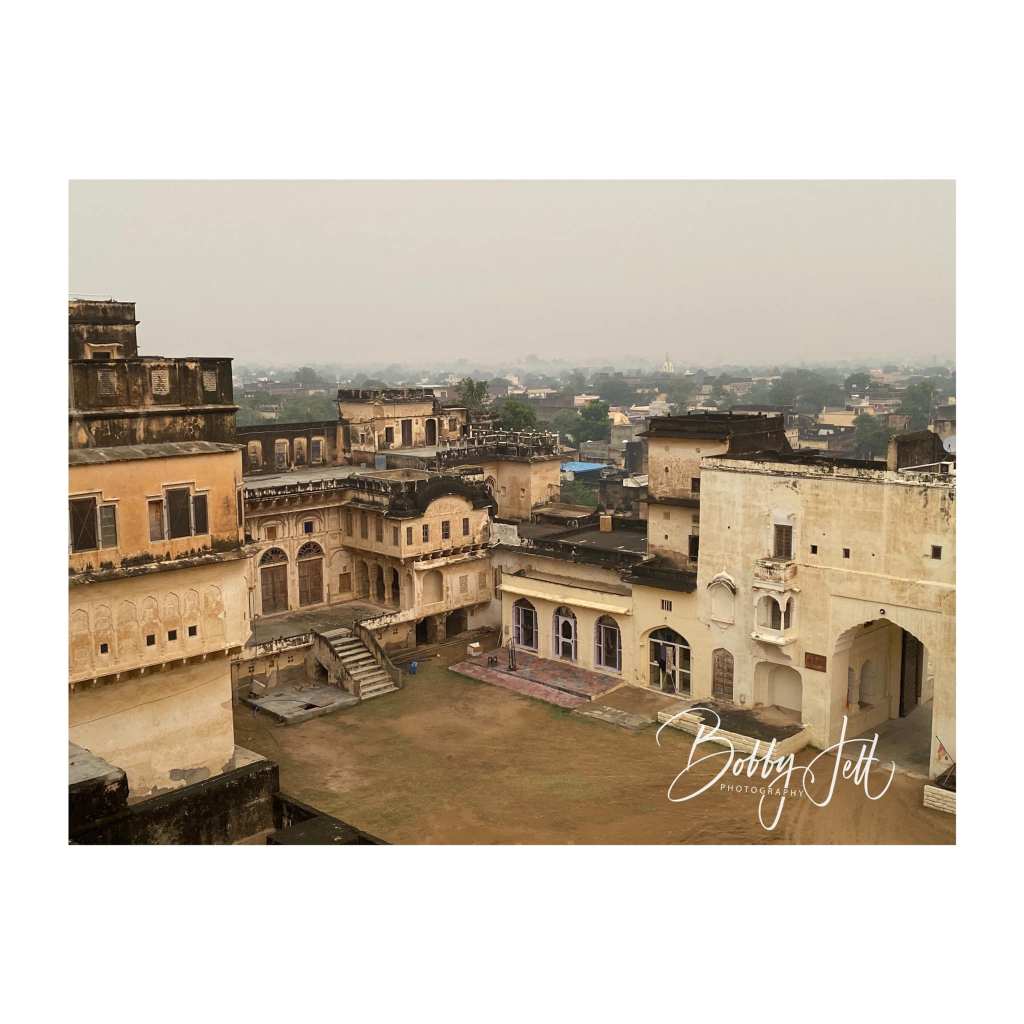
Suroth is a Village in Hindaun Tehsil in Karauli District of Rajasthan. Suroth is really a hidden gym in Rajasthan. It is off the beaten path of most tourists radars, but should really be reconsidered as a stop along the way to more well known Rajasthan cities. I stayed at the Suroth Mahal, which was an amazing heritage hotel and was once a palace, converted into a hotel. The food served here was some of the very best I have had in India, or anywhere. I had a great room with a large balcony that overlooked the small village homes below. The sunrises and sunsets really were beautiful from here. The staff went out of their way to show me the sights around this small town.
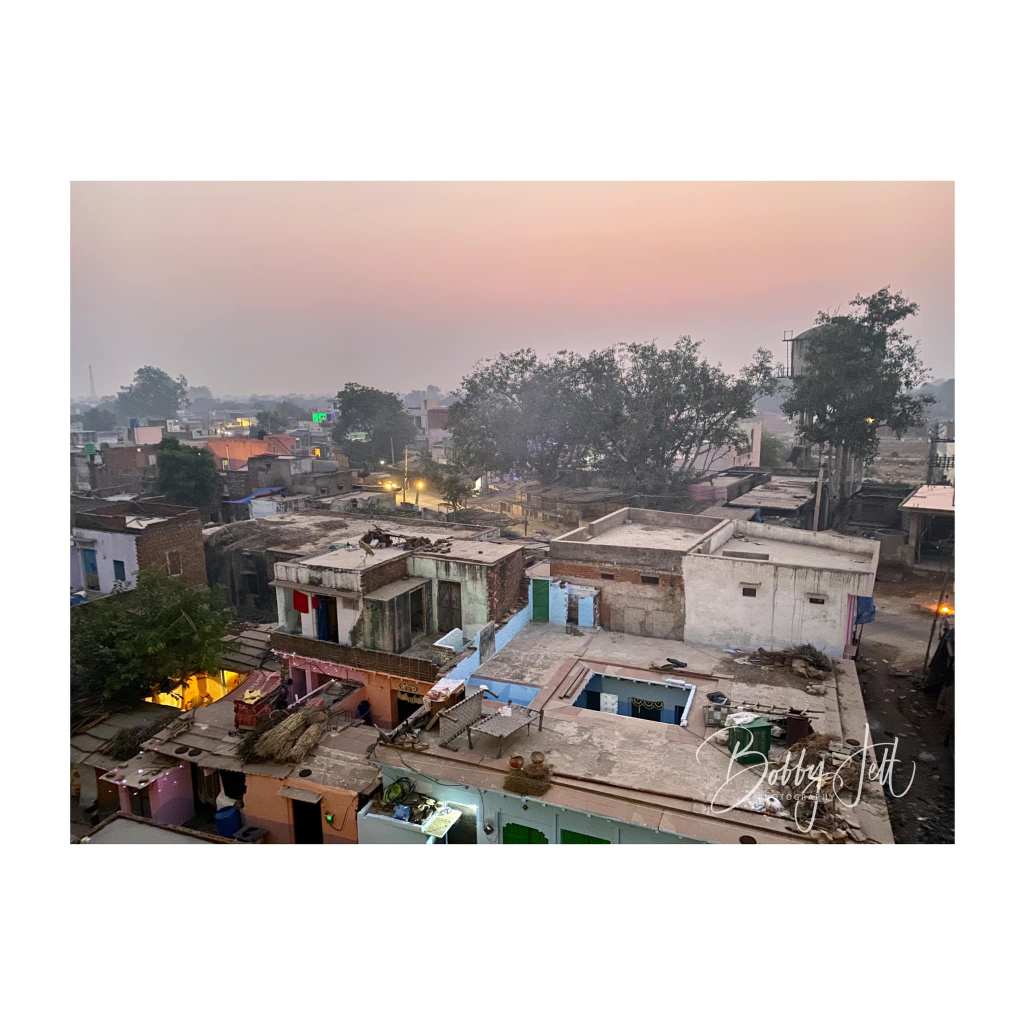
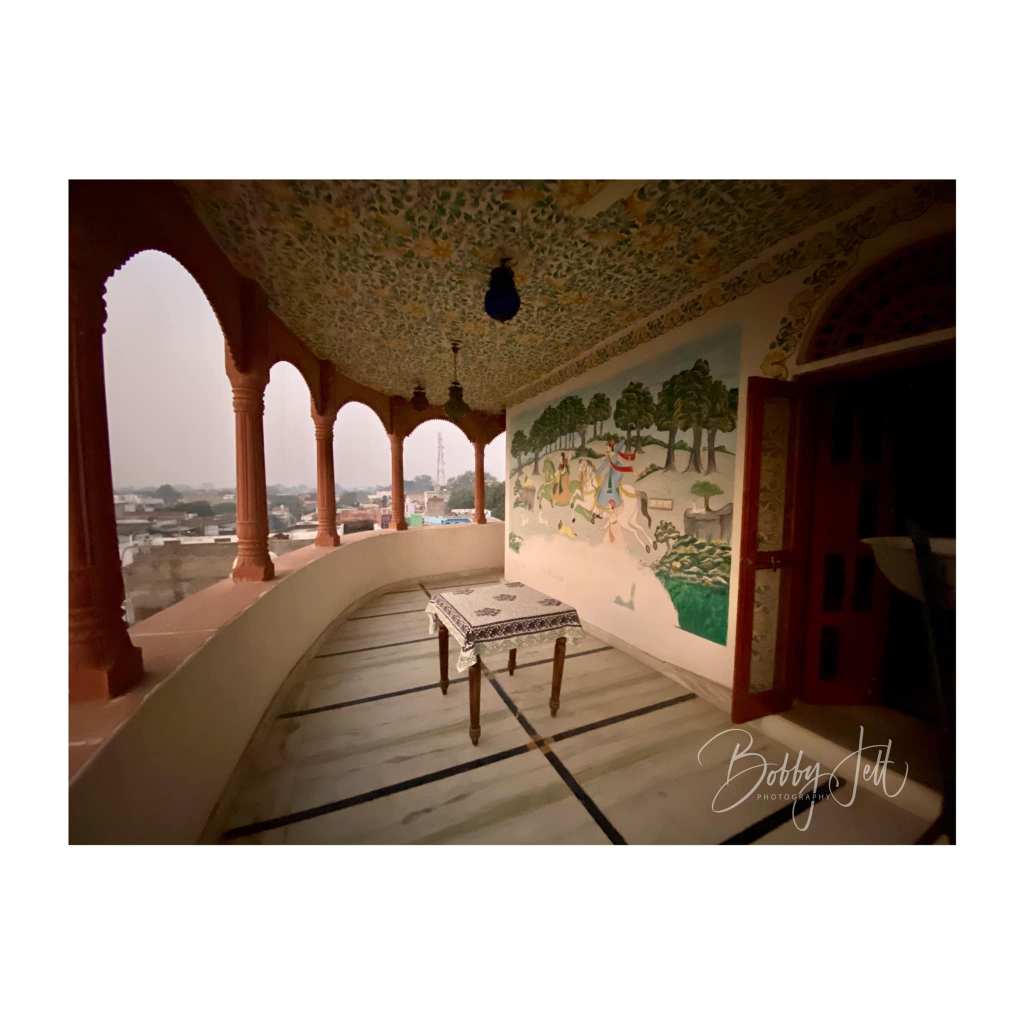
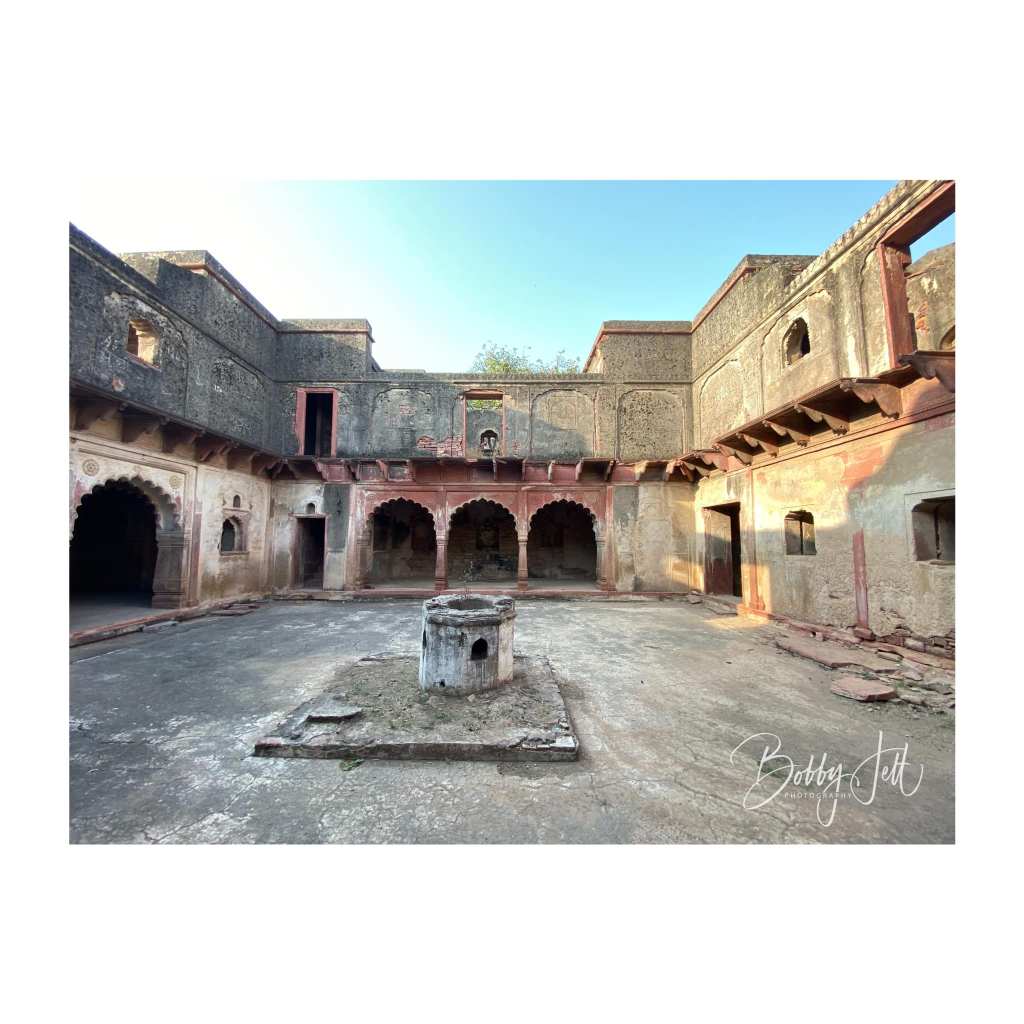
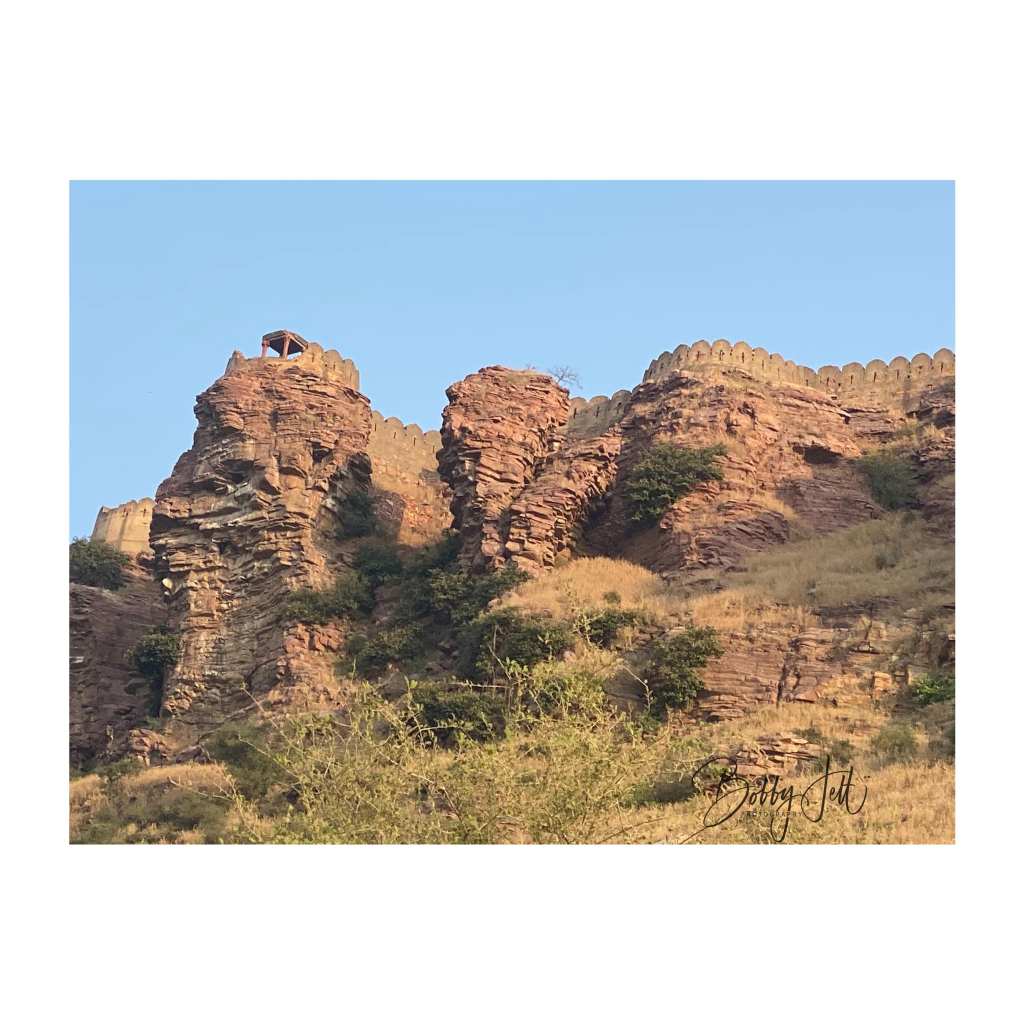
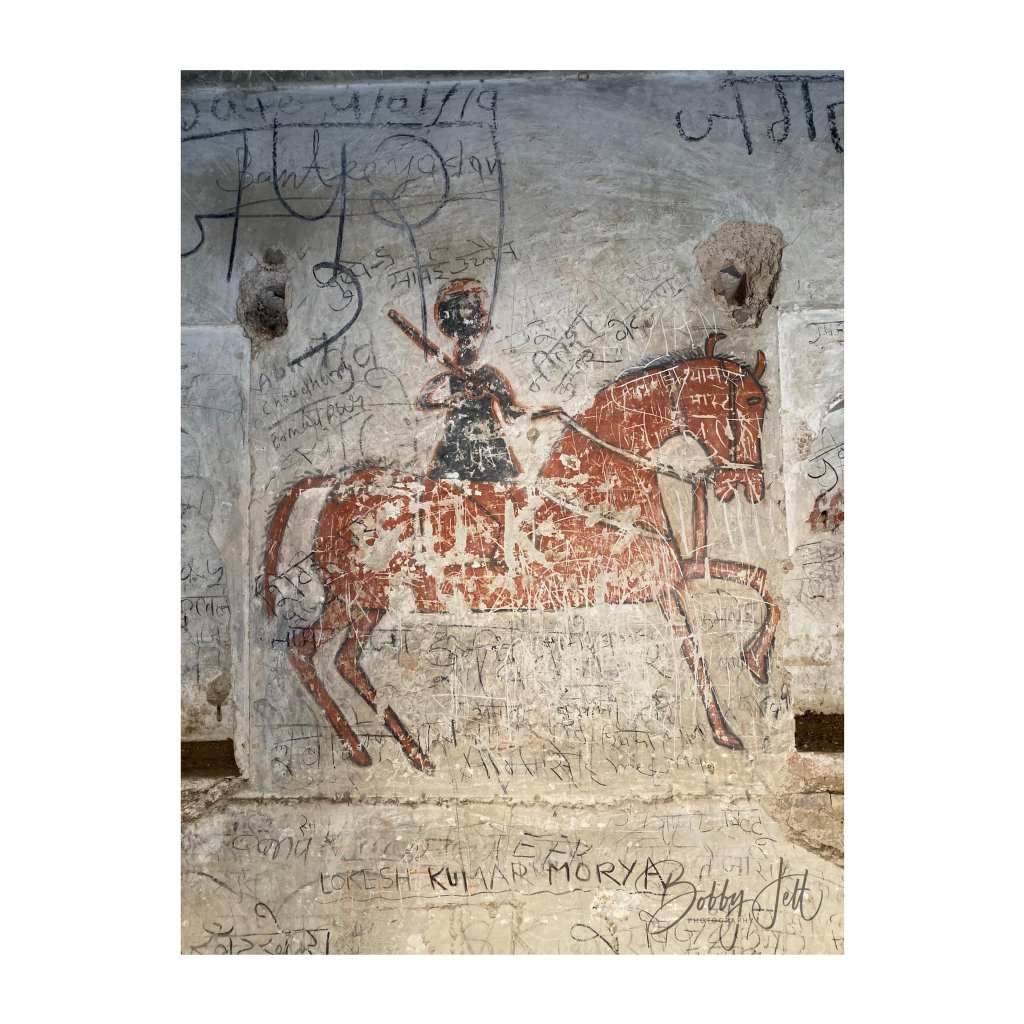
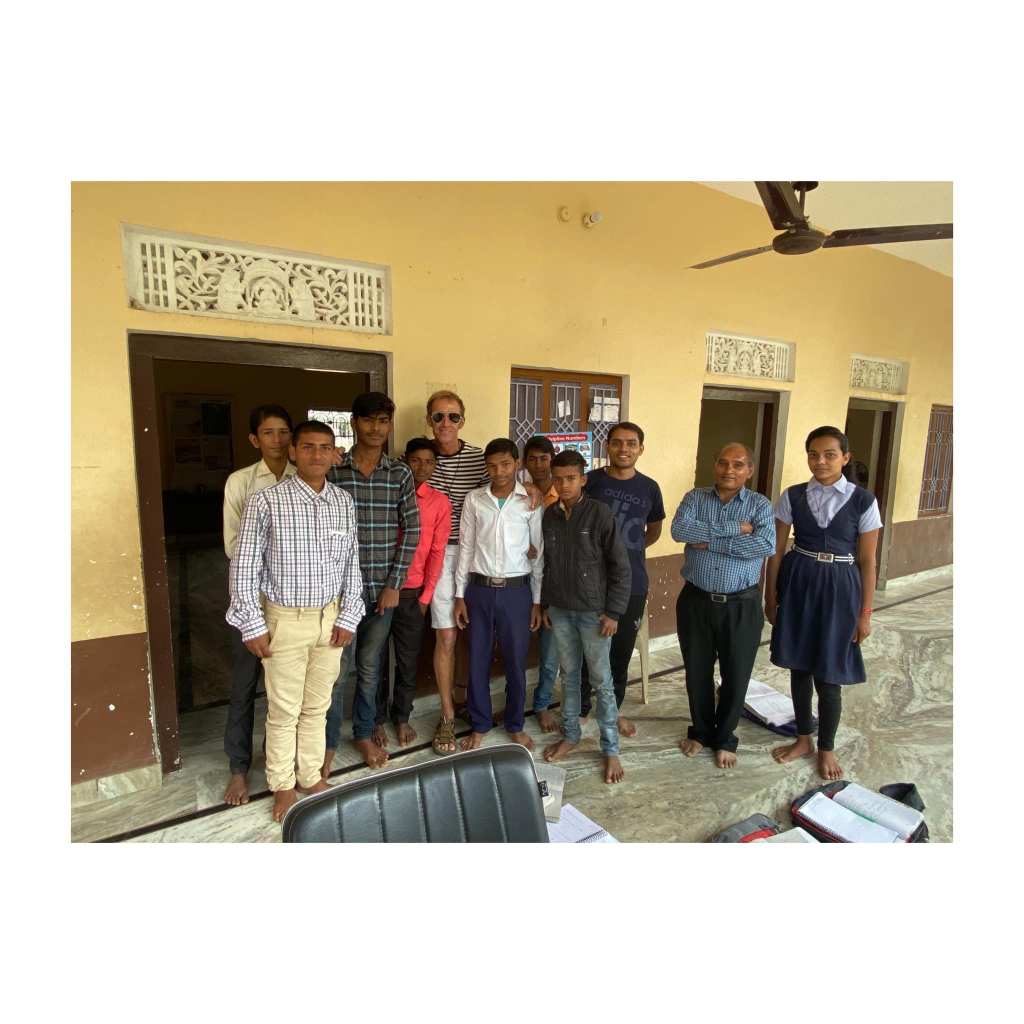
On one morning we went on a safari in search of black buck. They were found out in the middle of farmland, along a narrow stretch of road. Another day we took an excursion to a Hindu temple, and explored the small towns and villages around the hotel. One afternoon we visited a small secondary school in the village and visited with the instructor and his students. We also visited the large and imposing Bayana Fort, built in 1040 AD. It was far up on a hill accessed by a very steep climb. The entire fort was surrounded by an immense wall that reminded me of the wall at the Red Fort in Delhi. On some of the interior walls of the fort there was still original artwork very much visible. One day we rode the local train in general class to the next town to get a feel of local transport. The staff could not have been more accommodating with their time and generosity. I met some people that i am honored to count among my friends, who made my stay at at the Suroth Mahal a very memorable one!
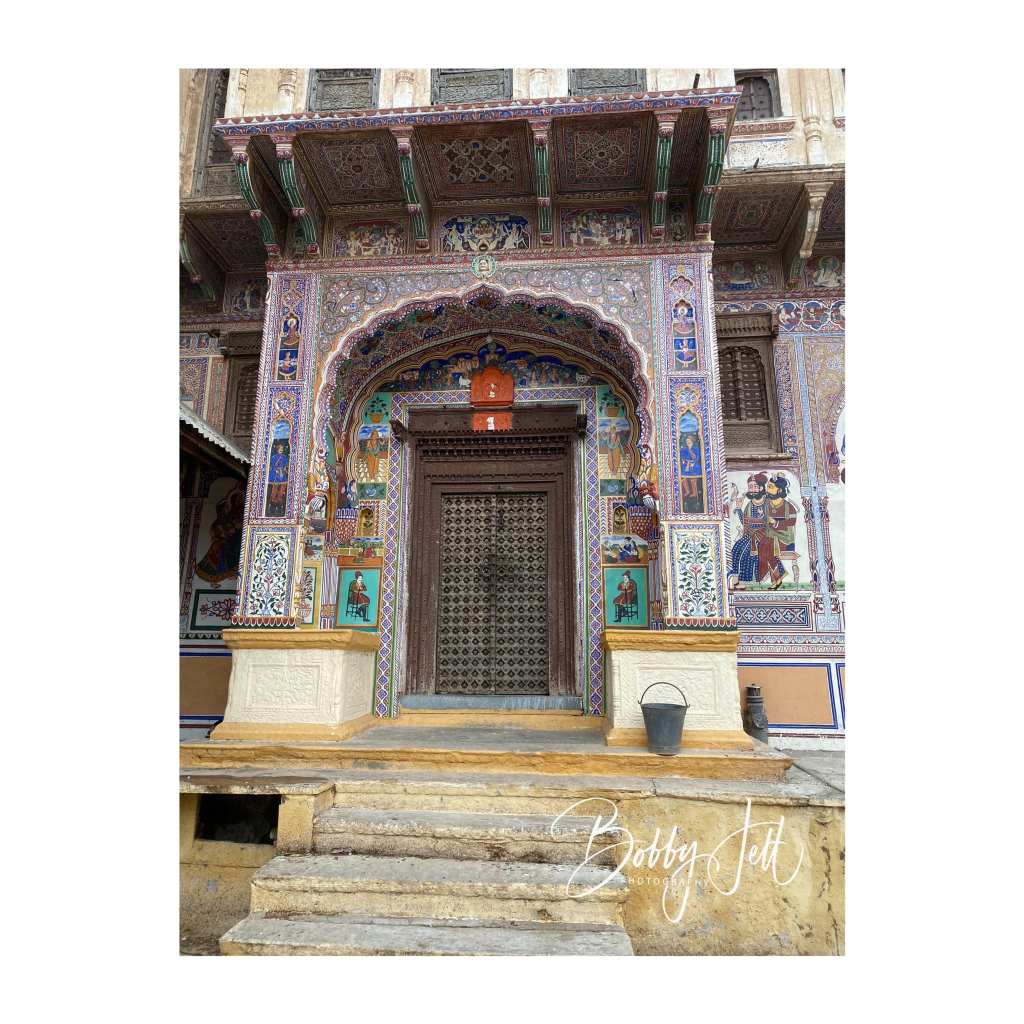
MANDAWA is located in the Shekhawati region of Rajasthan and is known for its many colorful havelis. I had a fantastic tour guide with the name of Om. He spent a half day with me exploring the small village with its many havelis. A few of the most colorful havelis were the Binsidhar Newatia and Murmuria havelis. Scores of havelis in this small village decorated their exterior and interior walls with hand painted scenes from their travels, and depictions of various guests who had passed through the walls. The havelis had three areas: the first was used as a business area to sell wares. This area was the most heavily decorated and served as a way to make an impression of guests and assure them of the success of the business. The second courtyard was used to house children and the elderly. There was also a large square open area in the middle of the second courtyard used to catch rainwater. The third courtyard, and highest in the haveli were used to house the owners of the house.
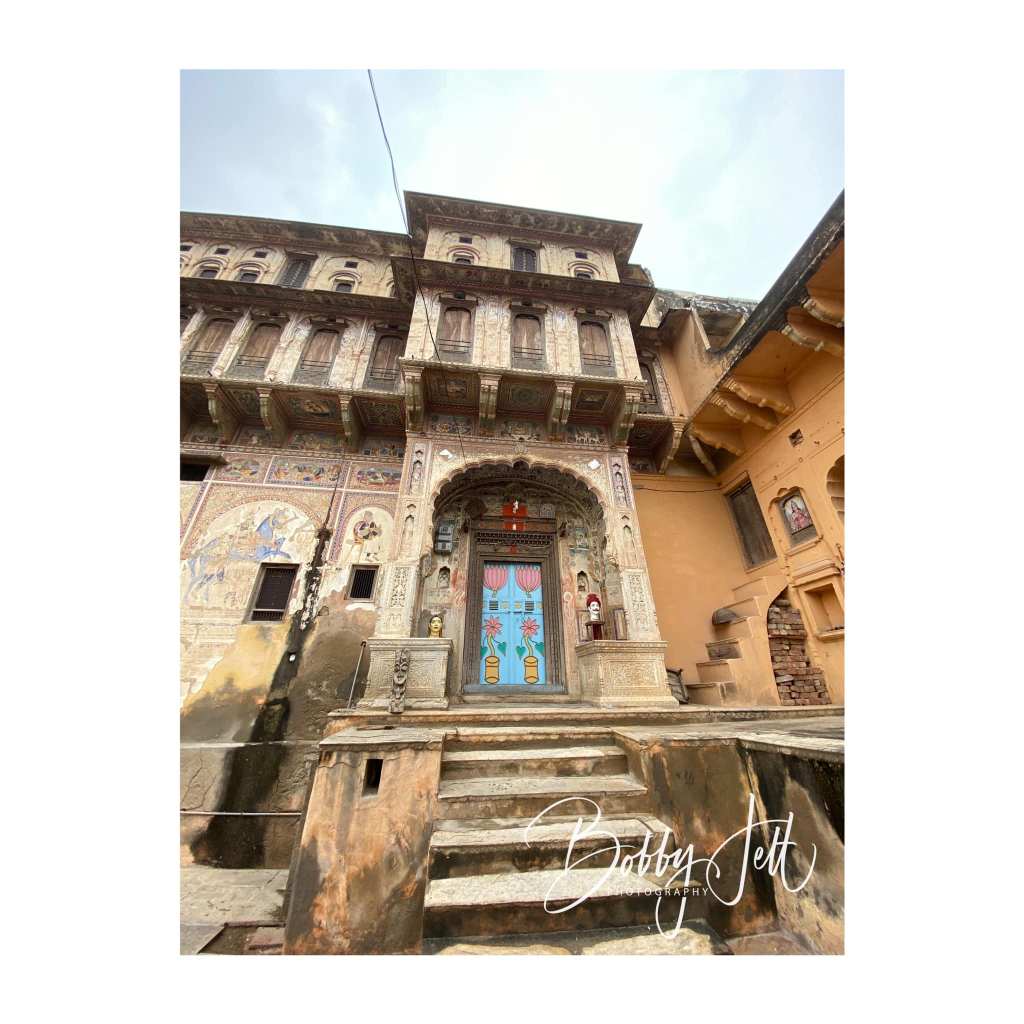
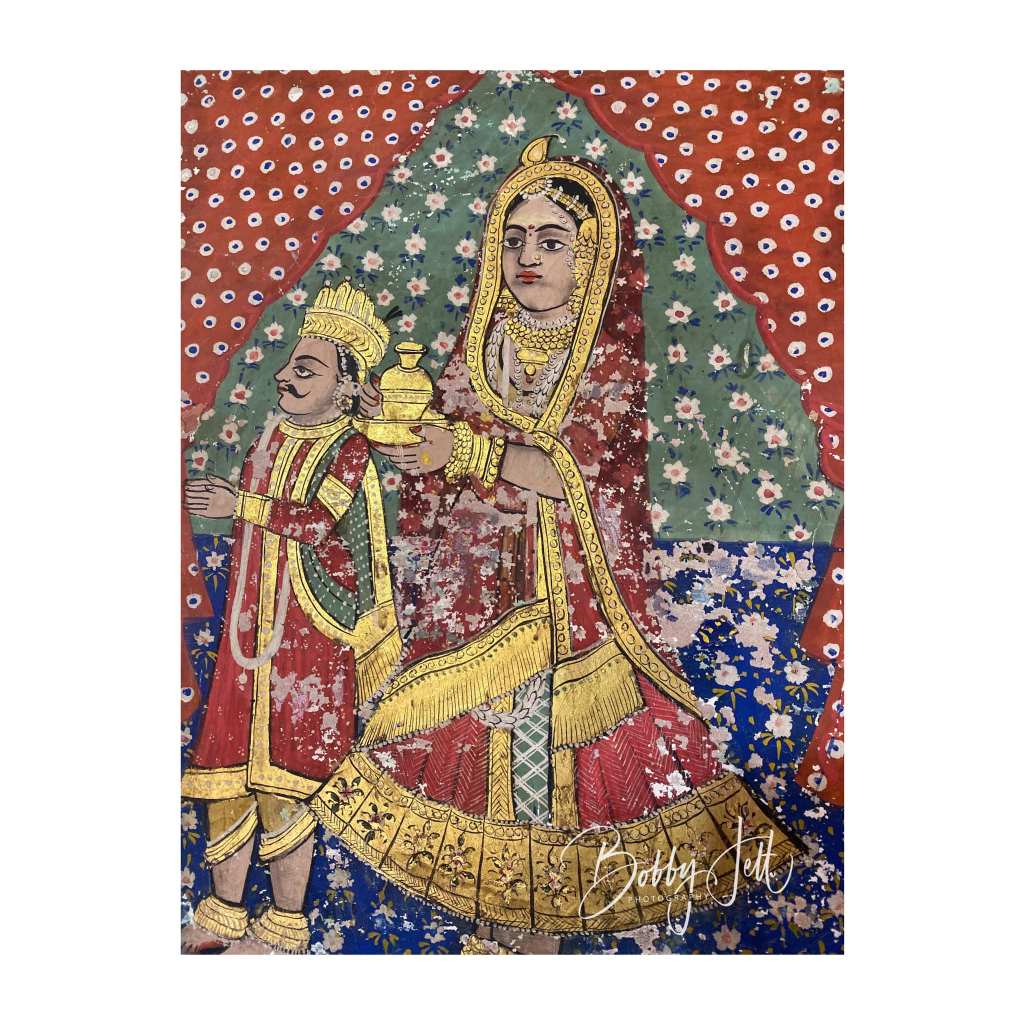
Outside of the havelis the village is very quiet and filled with merchants and shopkeepers selling the usual wares. There are a number of artists who live here who do very delicate hand painting with tiny brushes. I had lunch at a delicious restaurant, Monica rooftop that operated with just one cook. His food was mouthwatering! During my stay here i bedded down at Castle Mandawa, an immense castle that looks as ancient as its age. It was located just down an alley and the town was right outside the large door at the end of the lane.
 INDIA: A ROYAL RAJASTHAN ADVENTURE WITH DELHI, VARANASI, GUJARAT and THE ANDAMAN ISLANDS.