
My friend Sanoj arrived on the train from Bodhgaya a few hours after my early arrival into Dehli via Cedar Rapids/Detroit/Amsterdam/Delhi. Since I had a few hours to spare before he arrived in went down and used the hotel gym. It was great to stretch and have a good workout after a long journey on multiple planes.
I had visited Akshardham Temple on an earlier visit, but I had not seen everything there was to see there. Plus, my friend being Hindu I really wanted to share this amazing Temple with him. Akshardham is the largest “Living” Hindu temple in the world, built in 2005. [Living in this case meaning where worshipping and prayers go on.] Artisans used ancient techniques to carve the pale red limestone into elaborate reliefs, including 20,000 deities, saint and mythological creatures. The centerpiece is a 3m-high gold statue of Bhagwan Shri Swaminarayan who the temple was built to commemorate. We took part in the animatronics display which told the story of the life of Swaminarayan. He left his home at a very early age and wandered around the country, searching for enlightenment. He was soon recognized for his amazing knowledge and teachings and was seen as a Hindu guru. He spent his entire life sharing the teaching of compassion and equality for all. Today the movement has temples all over the world, including many in the United States. I learned that there is a temple as close to me as Des Moines, Iowa. It turned out to be a very moving and inspiring visit, and one I was very glad I got to share with Sanoj. As there was no photography at this temple, I was unable to photograph.
Diwali preparations are fast underway, and all of India is abuzz with excitement. Walking through Chandni Chowk last evening was physically challenging. I have never seen this always crowded area so jammed packed with bodies. This celebration is as close to what we in the west know as Christmas for all non Christian Indians. Houses are adorned with colored “fairy lights”, candles and lamps are lite and set out. People gather at friends and families houses and exchange the traditional gifts of nuts. Extended families play cards and wager small bets (although this is frowned upon by some of the older family members) and a hearty meal is shared. Everywhere we looked last night there were sellers with stacks and stacks of boxes of colorfully wrapped boxes of nuts, strings of all shapes and sizes of small colored lights, and small toys and photos of deities. COLORS, COLORS everywhere! As the night went on, the crowds grew more and more tightly packed, so moving very far, very fast was quite a challenge.

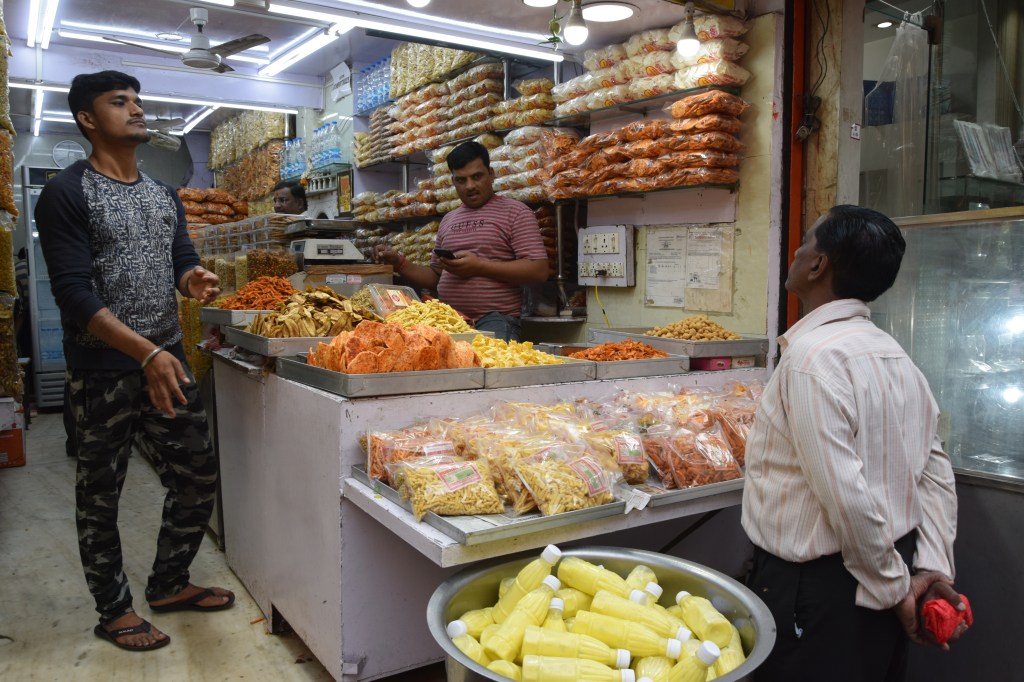
Later in the afternoon Sanoj and I had a delightful young woman, Akansha from Roobaroo Walking Tour lead us through Chandni Chowk on a culinary food tour. She maneuvered us through the crowds to visit all the long standing food stalls and introduced us to the vendors, some of whose businesses had been running for hundreds of years. This particular area is where the authentic street food is found, and many people venture in from all directions to gather around and quickly consume the food bites as soon as they are prepared. The tastes of the various foods covered all the spectrum of flavors, from tangy to sweet, spicy to salty, fruity to bitter. I convinced her at one point to let me try the local treat called “paan”, which is a Sanskrit meaning leaf. It is a preparation combining betel leaf with areca nut and is chewed for its stimulant and psychoactive effects. It is combined with all the ingredients, then wrapped in a leaf and the entire package is put in your mouth. Then you chew and chew and chew (never swallowing!) and eventually spit it out on the ground or one of the many containers that are along the streets. Many times you will see red splotches along the streets, or vendors who have red teeth and lips when they smile. It is likely they have been chewing one of these leaf packets. My verdict was mediocre. I really didn’t feel anything special, and the taste was certainly not something I would repeat. I couldn’t wait to spit it out actually. Following this up with one of the delicious ice cream treats seemed like a good idea!
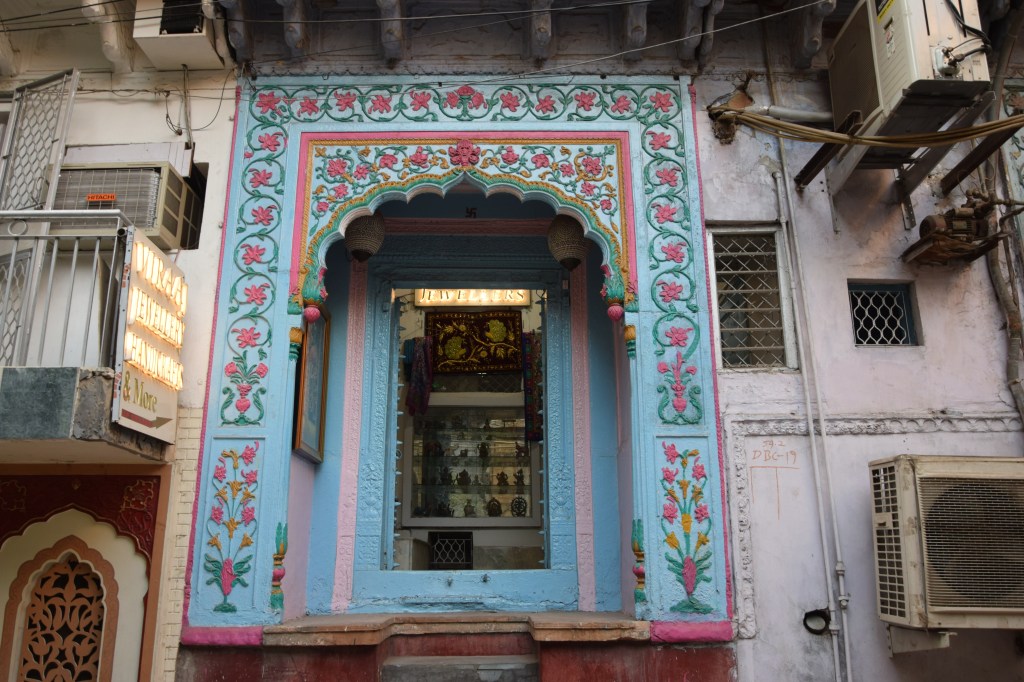
Wandering the alleyways was especially fun, as there are many hidden architectural treasures tucked away in this area. We stumbled upon many colorful doors and century old buildings that called out from the past. Many of them were in states of ruin, but you could still see many of the original details and appreciate their artistic beauty. We met one gentleman who ran a jewelry shop in this area that had been in the family for generations and had made jewelry for many of the Maharajas. I visited with him about the cost of rental in this area and he shared with me their ongoing quest to update the properties. At the time of construction there obviously was no plumbing or electrical, so outfitting these ancient buildings is a constant challenge. Outside along the alleyways and narrow streets the electrical lines are a maze of twisted snake lines.
The next morning Aayush from Roobaroo met us and took us on a tour that started at Jama Masjid. This was a pocket of calm after the hustle and bustle of Chandni Chowk. Jama Masjid is the capitals largest mosque and is built on a 10m elevation. It can hold a mind blowing 25,000 worshippers. The temple is also known as the “friday mosque” and was Shah Jahan’s final architectural triumph, built between 1644 and 1658. Aayush took us up on an elevated spot looking down on the mosque and Chandni Chowk, and from there he explained how architect Edwin Lutyens incorporated the mosque into his design of New Dehli: the Jama Masjid, Connaught Place and Sansad Bhavan (Parliament House) are all in a direct line. Since we visited on a Thursday it was relatively quiet, but the next day being Friday there would be a very large number of worshippers praying and visiting the mosque.

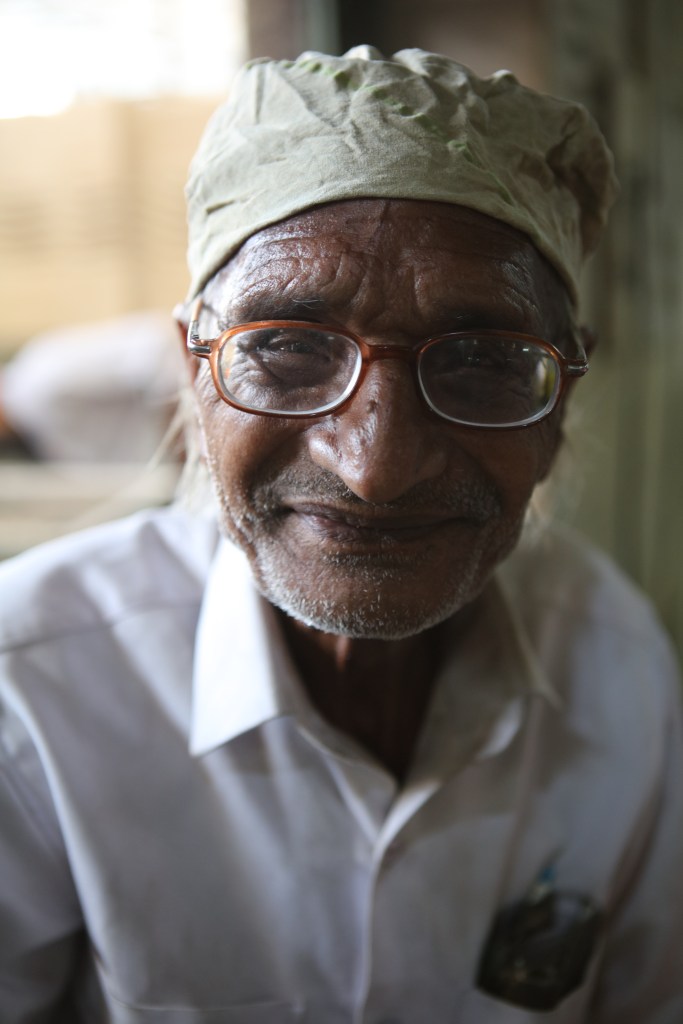
Next we moved to the Spice Market area of Chandi Chowk. The entire area is centered around an old historic haveli. Seasonal workers live in housing quarters above the spice market and bring in loads of spices and goods from local areas to sell wholesale. It is possible however to buy small amounts of any spice you desire. India provides a major portion of spices around the world. Since Diwali preparation was underway there were numerous sellers with a wide assortment of nuts and dried fruits that you could buy colorful foil boxes to give as traditional gifts. We ventured up a narrow passageway that led to a rooftop area that provided an amazing view of the market below. On this floor the smell of spices was intoxicating, as this served as a large open store room as such with enormous amounts of spices stacked everywhere one looked. It was rather like the smell of asiatic lilies in a small room, and my eyes watered and my nose ran after spending only a short amount of time you here. I was able to meet some of the sellers and get some great photographs of them.

Next we visited Gurdwara Bangla Sahib, the magnificent white marble gurdwara (Sikh temple) topped by glinting golden onion domes, which was constructed at the site where eighth Sikh guru, Harkrishan Dev stayed before his death in 1664. As in all gurwardas, free meals are served to pilgrims daily. Before sitting down to eat we rolled chapatis and then watched them puff up as we turned them above a hot fire. The women around the large low table that we sat around were impressed with our rolling techniques and the fact that the flattened dough came out so round. I shared with them my history of pie making! The meal was served while we sat on the floor in long rows, as much as we wanted to eat. It was fun to eat with our fingers and lap up every delicious morsel of the meal!
Before visiting the India Gate to see it lit at night we went to Delhi’s oldest living neighborhood, Hazrat Nizam-un-din Dargah (Nizamuddin Basti) to visit the marble shrine of Muslim Sufi saint Nizam-unm-din Auliya. The dargah is hidden away in a tangle of bazaars selling rose petals, attars and offerings to place on the graves. We happenes to arrive at the time of one of the Islamic devotional singing of the Sufis (qawwali) among the crowds of devotees. Nizam-un-din died in 1325 at the ripe age of 92. His doctrine of tolerance made him popular among people of all faiths. His shrine is regularly visited by throngs of devotees of all faiths and he is one of the most revered of all persons in India’s colorful history. This area is also filled with hundreds of graves including those of Kings and nobles who wanted to be buried close to Nizam-un-din. There is also a stepwell (baoli) here that is believed to contain water that is holy and is a regular spot for bathers and worshippers. I didn’t shoot any photos here as this is a very holy and sacred area.
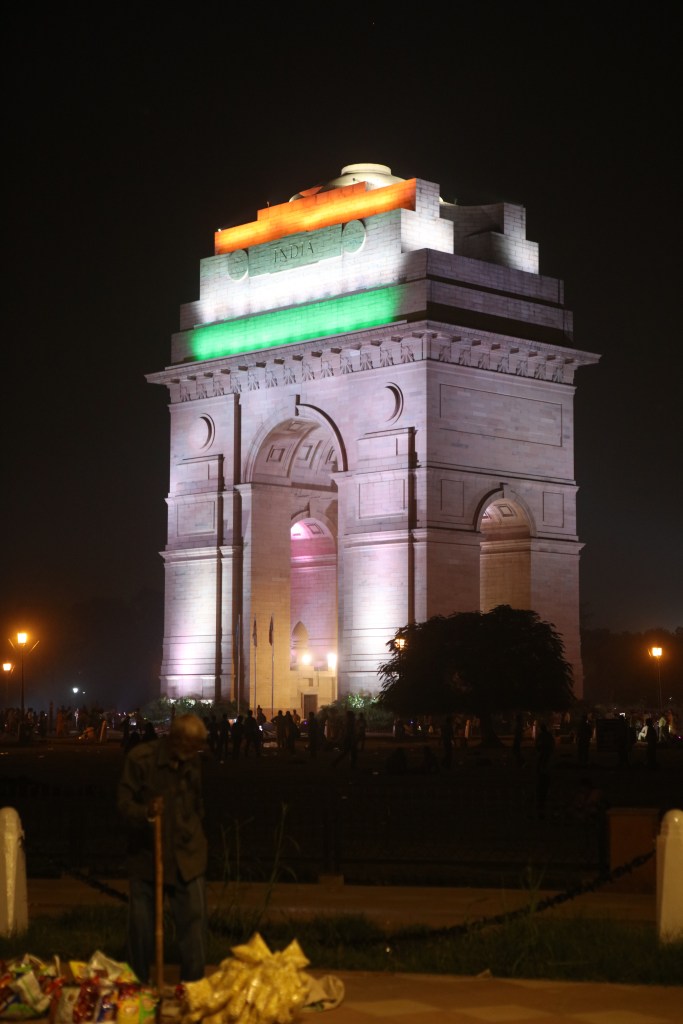
We capped off the evening at the India Gate, which was lit in the colors of green, white and red, the colors of the India flag. Many hawkers and touts were selling photographs and various bangles. Sanoj bought a toy that shot up into the sky and whirled around with colored lights for his son. The last time I was here the gate was not lit, and I must say it is glorious basked in lights against the night sky.
The following day we rented e-bikes and rode around on a tour of Old and New Dehli with Aayush. We started the ride early in the morning at 7:30 before all the traffic was thick on the streets. This is a wonderful way to explore the city and get your sea legs riding in Delhi traffic! It wasn’t as scary as I thought it would be and was actually quite fun and one of the best experiences of Delhi. We had breakfast at a government canteen hidden away on a backstreet. The food was delicious and very much appreciated after our 4 hour ride.

Later that evening we again met with Akansha and toured Mehrauli Archeological Park, the oldest settlement in Dehli. This area contains over 440 monuments-from the 10th century! to the British era, all nestled within a forest. Most impressive are the time ravaged tombs of Balban and Quili Khan, his son, and the Jamali Khamali mosque, attached to the tomb of the Sufi poet Jamali. Interestingly, the tomb next to Jamali is that of an unknown person, but it is a male grave. It is believed to perhaps be a consort of Jamali, as homosexuality was common in this time. Also in this area is the 16th century Rajon ki Baloli, Delhi’s finest stepwell. One alarming fact we learned was that Quli Khan’s tomb was bought by Britain’s Sir Thomas Metcalfe, [4th Baronet and agent to the Governor of India at the Imperial court of the Mughal Emperor Bahadur Shah Zafer] and converted into a summer home. Adham Khan was his brother and his mausoleum is also nearby, but escaped that fate. Akansha showed us where Quli Khan’s grave was removed and a dining room table installed in the summer home! Just one more example of the damage, both immediate and lasting the British had on India.
We ended the evening at the Qutub Minar, magnificently lite at dusk. I had visited here before, but in the middle of the afternoon. It is much more impressive at night lite from top to bottom. The first monuments here were erected by the Sultans of Mehrauli

 INDIA: A ROYAL RAJASTHAN ADVENTURE WITH DELHI, VARANASI, GUJARAT and THE ANDAMAN ISLANDS.